
Purchasing medication online has become second nature for millions across the UK, yet the gap between a legitimate pharmacy and a criminal front often boils down to a single, easily overlooked detail. Recent enforcement data reveals a stark reality: MHRA investigators seized nearly 20 million doses of illegally traded medicines in 2025 alone, valued at approximately £45 million. Behind polished websites and reassuring imagery, non-compliant platforms exploit consumer trust through sophisticated deception. Regulatory compliance and pharmaceutical traceability form the twin pillars preventing counterfeit medications from reaching vulnerable patients. Understanding how to verify these safeguards within seconds transforms an anxiety-inducing decision into a straightforward, evidence-based protocol you can apply before every online purchase.
This content is provided for informational purposes only and does not constitute medical advice. Always purchase medications from verified, regulated online pharmacies registered with the MHRA (UK) or equivalent regulatory body. Consult a qualified healthcare professional for any health-related decisions.
Your 60-second pharmacy safety snapshot:
- Verify MHRA registration and GPhC logo in under 60 seconds via official registry at pharmacyregulation.org
- Traceability equals unique 2D barcode codes on all prescription medicines under UK and EU law
- Red flags include no physical address, missing pharmacist details, or payment requests before prescription verification
- WHO estimates at least 1 in 10 medicines in unregulated channels globally are substandard or falsified
Why regulatory compliance anchors consumer confidence in digital pharmacy ?
Consider a routine scenario: someone searches for allergy medication at 11 PM when local chemists are closed. Within three clicks, a website promises next-day delivery at a competitive price. The checkout process feels familiar, the design appears professional, and customer reviews seem genuine. Yet none of these visual cues reveal whether the medication will arrive authentic, properly stored, or even contain the correct active ingredient. Consumer protection data consistently demonstrates the most frequent error is conflating polished web design with regulatory legitimacy, when visual aesthetics bear zero correlation to MHRA registration status.
1 in 10
Medicines circulating in low and middle-income countries are substandard or falsified, according to WHO surveillance
The scale becomes clearer through enforcement statistics. Global health authorities estimate countries spend US$30.5 billion annually on substandard and falsified medical products, with online channels representing a rapidly expanding risk vector. These counterfeit medications may contain incorrect dosages, harmful substances, or lack any active ingredient whatsoever, placing patients at immediate physical risk whilst undermining trust in legitimate healthcare systems.
Choosing a verified platform becomes crucial in this context. Regulated online pharmacies such as Euro-Pharmas demonstrate this regulatory commitment through transparent MHRA registration, visible GPhC certification, and comprehensive supply chain documentation. These platforms prioritise traceability alongside quality certifications, ensuring every product carries verifiable credentials linking back to verified European manufacturers. For consumers, this translates into reassurance that medication provenance can be independently confirmed through official registries before purchase, transforming abstract compliance into tangible consumer protection.
Regulatory frameworks exist precisely to interrupt this risk chain. MHRA registration in the UK, mirroring equivalent systems across the EU, establishes mandatory quality controls covering wholesale sourcing, storage conditions, dispensing protocols, and pharmacist oversight. Compliance verification transforms from abstract bureaucracy into a concrete consumer safeguard the moment you understand which specific elements to check. The broader discussion around availability of OTC anxiety medications through regulated channels illustrates how proper certification expands safe access rather than restricting it.
Post-Brexit, UK pharmaceutical regulation operates independently under MHRA authority rather than the European Medicines Agency, creating jurisdiction-specific verification requirements. A pharmacy serving UK customers must meet UK standards regardless of where the company is physically based, while cross-border purchases from EU platforms require checking different but parallel certification systems. Understanding this regulatory split prevents confusion when verifying international suppliers.
The certification landscape: decoding MHRA, GPhC and European standards
Picture certification systems as layered passport controls at international borders: different authorities verify different aspects of legitimacy, yet all serve the fundamental purpose of preventing illegal entry. The UK operates three primary verification tiers for online pharmacies, each checking distinct compliance elements that together form a complete authentication framework.
MHRA registration forms the UK regulatory foundation. The Medicines and Healthcare products Regulatory Agency functions as the ultimate licensing authority for any entity selling medicinal products in Great Britain. MHRA registration covers the entire supply chain, from wholesale dealer licenses through to retail authorisation, ensuring every medication passes through verified, audited channels. Recent enforcement actions underscore the scale of non-compliance: investigators seized millions of doses across multiple medication categories including sedatives, erectile dysfunction medicines, and painkillers during 2025 operations targeting unlicensed sellers. Registration status sits on public record, accessible through MHRA’s online databases, though the interface requires knowing which specific register to query. Wholesale dealer authorisations, pharmacy premises licenses, and distance selling permissions each occupy separate registry sections, demanding methodical cross-referencing to confirm full compliance.
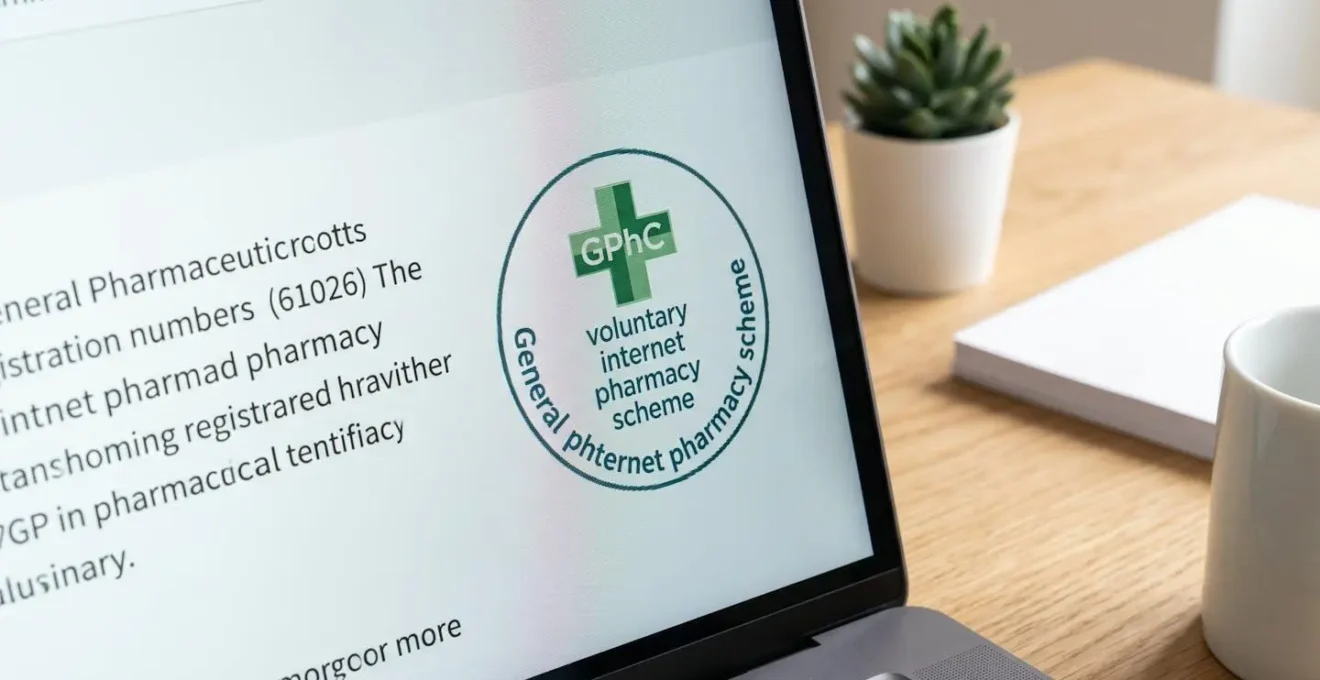
The GPhC Internet Pharmacy Logo serves as your visual verification tool. The General Pharmaceutical Council mandates a standardised visual identifier for all registered online pharmacies operating in Great Britain. This Internet Pharmacy Logo serves as an instantly recognisable trust mark, designed specifically for consumer-facing verification. February 2025 mandatory guidance from the GPhC establishes that high-risk medicines must not be prescribed based solely on online questionnaires, requiring independent clinical verification through two-way communication between patient and prescriber. The critical functional element: legitimate logos embed a clickable hyperlink directing users to the pharmacy’s official register entry at pharmacyregulation.org. This technical requirement prevents simple image copying, as fraudulent sites cannot replicate the authentication chain. Testing the link takes approximately thirty seconds and provides definitive proof of registration status.
EU Common Logo and cross-border standards complete the framework. For cross-border purchases from EU member states, the EU Common Logo operates under parallel principles whilst linking to individual national competent authority registers rather than a centralised database. The logo displays a standardised design across all EU countries, featuring the national flag of the issuing state alongside a web link to that country’s pharmacy register. Post-Brexit regulatory divergence means UK-based pharmacies no longer display the EU Common Logo, whilst EU pharmacies selling to UK customers must meet both their domestic requirements and UK advertising standards. This creates verification complexity for international purchases requiring checks across multiple jurisdictional registries. The table below compares these four certification layers across issuing authority, geographic scope, and practical verification steps you can execute within minutes.
| Certification Type | Issuing Authority | Geographic Scope | Verification Method | Your Action |
|---|---|---|---|---|
| MHRA Registration | Medicines and Healthcare products Regulatory Agency | UK only (independent since 2021) | Online MHRA registry search | Check pharmacy name and address match exactly |
| GPhC Internet Pharmacy Logo | General Pharmaceutical Council | Great Britain registered pharmacies | Click logo to verify link destination | Confirm clickable link directs to pharmacyregulation.org register |
| EU Common Logo | National competent authorities | EU member states | Click logo linking to national registry | Cross-check with country-specific register entry |
| Pharmacist Registration | GPhC (UK) or national bodies (EU) | Jurisdiction-specific | Search professional register by name | Verify pharmacist name and registration number visible on website |
Traceability mechanisms that guarantee medication authenticity
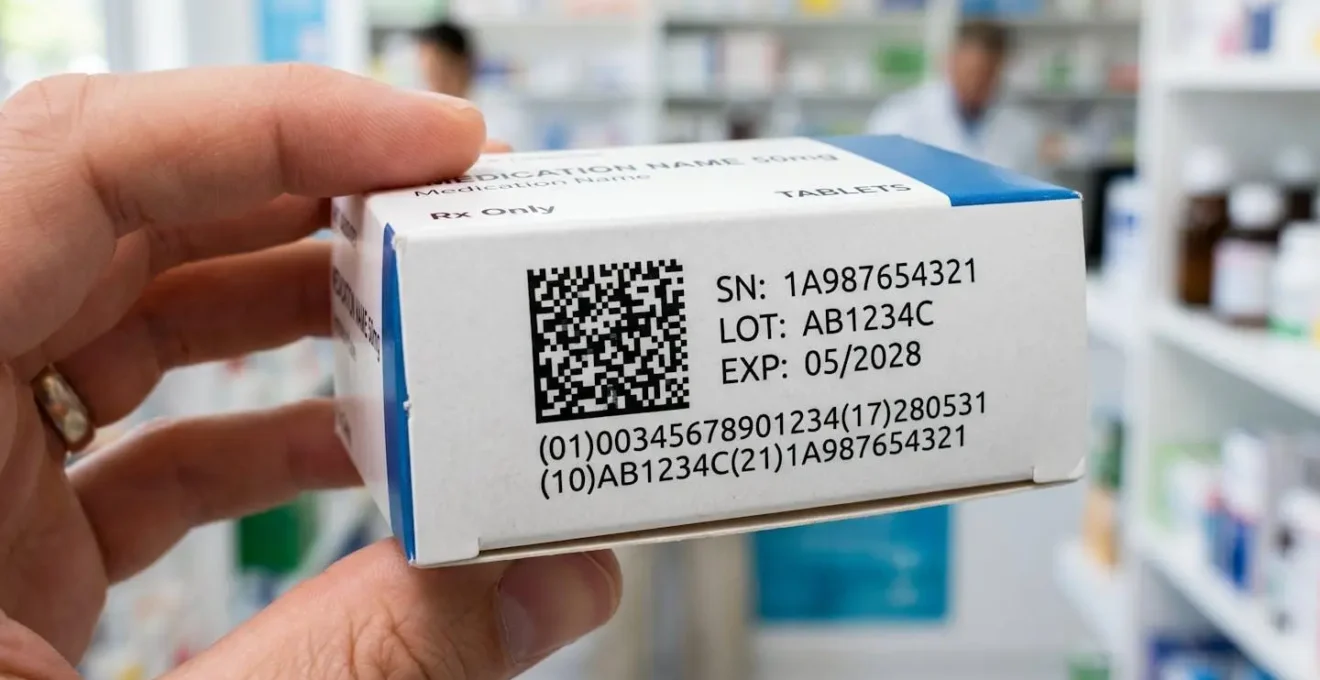
Pharmaceutical traceability operates through serialisation technology mandating unique identifier codes on prescription medicine packaging. The EU Falsified Medicines Directive, implemented from February 2019, requires pharmaceutical manufacturers to apply a distinctive 2D barcode and anti-tampering device to every individual pack of prescription medication. UK regulations mirror these requirements despite Brexit, maintaining alignment with European standards for supply chain integrity.
Each serialisation code functions as a digital fingerprint, recorded in national verification systems at the point of manufacture and deactivated upon legitimate dispensing. Scanning the 2D barcode through authorised verification applications confirms whether the specific pack remains in legitimate circulation or has been flagged as potentially compromised. This creates an authentication layer independent of website design or seller claims, anchored in manufacturer-level security measures.
Cold chain maintenance represents another critical traceability component, particularly for temperature-sensitive medications requiring refrigeration throughout distribution. Legitimate online pharmacies maintain audit trails documenting storage temperatures from warehouse through to courier handover, protecting product efficacy. Unregulated sellers skip these costly safeguards, potentially delivering degraded medication that appears visually identical to properly stored stock yet lacks therapeutic effectiveness.
Verification shortcut: Request batch number and expiry date information before purchasing prescription medications. Legitimate pharmacies provide this data routinely, whilst non-compliant sellers often cannot access manufacturer records to furnish accurate batch details.
Blockchain integration represents an emerging technology layer some pharmaceutical supply chains now employ for enhanced traceability. Distributed ledger systems create immutable transaction records tracking medication movement from factory through to final dispensing, eliminating opportunities for counterfeit insertion at intermediary stages. Whilst not yet mandatory, blockchain adoption signals sophisticated quality assurance commitment exceeding minimum regulatory requirements.
Your verification protocol before any online purchase
Picture a typical consumer attracted by competitive pricing on a professional-looking website, proceeding to checkout without registry verification. Industry data reveals this pattern accounts for the majority of counterfeit medication purchases, entirely preventable through a three-minute authentication sequence performed before entering payment details.
First, cross-check the GPhC online register. Navigate directly to pharmacyregulation.org and access the public register of pharmacies. Search using the website’s registered business name, which must appear in the site’s legal footer or terms of service. The register entry displays the pharmacy’s physical premises address, registration number, and superintendent pharmacist details. Every element must match the website exactly — discrepancies in spelling, street addresses, or pharmacist names indicate potential fraud. Registration status updates in real-time when regulatory action occurs. A pharmacy removed from the register for compliance violations cannot legally operate, yet the website may remain active for days or weeks before enforcement authorities seize the domain. Fresh verification before each purchase rather than assuming previous checks remain valid protects against this timing gap.
Second, verify visible certification logos and links. Locate the GPhC Internet Pharmacy Logo, which regulations require to appear prominently on every page offering pharmacy services. Click the logo image itself: legitimate implementations hyperlink directly to the pharmacy’s specific register entry, bypassing the search interface entirely. Fraudulent sites display static logo images without functional hyperlinks, or link to the GPhC homepage rather than the verified register entry. Inspect the hyperlink destination before clicking by hovering your cursor over the logo and checking the URL preview in your browser’s status bar. The destination must begin with « https://www.pharmacyregulation.org » — any variation suggests deception. Some sophisticated fraud operations link to lookalike domains with subtle misspellings designed to pass casual inspection.

Third, assess website transparency and contact information. Examine the contact information section for a complete physical UK address rather than merely a PO Box or email form. Legitimate pharmacies display their registered premises address matching the GPhC entry, alongside a working telephone number answered during business hours. Test the contact number by calling to confirm someone responds representing the pharmacy by name. Check for a named superintendent pharmacist or responsible pharmacist whose registration you can independently verify through the GPhC professional register. This individual carries legal accountability for all dispensing decisions, and their visible identification signals professional oversight. Anonymous pharmacy operations where no individual pharmacist claims responsibility indicate regulatory non-compliance.
- Does the website display a GPhC Internet Pharmacy Logo?
Yes: Continue to next check. No: RED FLAG — Do not purchase. UK law mandates this logo for all registered online pharmacies.
- Is the GPhC logo clickable, linking directly to the official register?
Yes: Continue to next check. No: RED FLAG — Counterfeit logo. Genuine logos must hyperlink to pharmacyregulation.org register entries.
- Can you locate the pharmacy’s entry in the GPhC register using the website’s business name or address?
Yes: Continue to next check. No: RED FLAG — Not registered. Stop immediately and report to MHRA enforcement team.
- Does the website display a physical UK address, registered pharmacist name, and functioning contact telephone number?
Yes: LIKELY LEGITIMATE — Proceed with caution, verify prescription requirements. No: WARNING — Transparency failure raises concern. Seek alternative registered pharmacy.
Verdict interpretation: GREEN (all checks passed) = Proceed with confidence | AMBER (one warning) = Verify further or choose alternative | RED (any red flag) = Do not purchase, report to MHRA
- GPhC logo present and clickable, linking to official register
- Pharmacy name and address verified in GPhC online register
- Registered pharmacist name visible on website
- Physical UK address and contact telephone number displayed
- Clear privacy policy and GDPR compliance statement available
- Secure payment gateway indicated (https:// protocol plus padlock icon)
- Prescription verification process explained for prescription-only items
- No unsolicited promotional emails or spam communications received
For broader context on verification protocols and consumer safeguards when evaluating online pharmaceutical services, comprehensive analysis of safety of purchasing medication online provides additional frameworks for risk assessment across different medication categories and regulatory jurisdictions.
Red flags signalling non-compliant or rogue pharmacy platforms
Can you spot these six critical warning signs within 10 seconds of landing on a pharmacy website? Pattern recognition training based on MHRA enforcement case data reveals consistent fraud markers appearing across non-compliant operations, regardless of how sophisticated their visual presentation appears.
Critical warning signs demanding immediate exit:
- No prescription required for prescription-only medicines — illegal under UK Medicines Act and signals deliberate regulatory violation
- Prices significantly below market average — potential counterfeit indicator or stolen medication source
- No physical address or only PO Box listed — prevents regulatory inspection and customer recourse
- Website domain registered very recently — check WHOIS data for registration dates within past 6 months
- Unsolicited promotional emails offering controlled substances — legitimate pharmacies never market prescription medications this way
- No pharmacist consultation offered or available — professional oversight legally required for dispensing decisions
- Payment only via untraceable methods — cryptocurrency or wire transfer demands indicate fraud operation
- Spelling errors, poor grammar, or unprofessional content — legitimate healthcare businesses maintain quality standards
Domain age investigation takes 30 seconds using free WHOIS lookup tools. Fraudulent pharmacy sites frequently operate on freshly registered domains, abandon them after several months once enforcement scrutiny increases, then relaunch under new domain names with identical design templates. A domain registered within the past six months warrants heightened suspicion, particularly when combined with other warning indicators.
Unsolicited email marketing represents an absolute prohibition for prescription medications under UK advertising regulations. Legitimate pharmacies may send newsletters to existing customers who explicitly opted in, but will never initiate contact promoting prescription-only medicines to individuals outside an established patient relationship. Any email received offering to sell prescription medications without prior engagement signals illegal marketing practices.
Price differential analysis requires market knowledge to apply effectively. Whilst competitive pricing remains legitimate, prices falling more than thirty percent below established market rates for branded medications suggest either counterfeit products or illegally sourced stock. Generic medication pricing varies more widely and permits greater discounting, complicating this assessment for over-the-counter products.
How can I verify an online pharmacy is registered in the UK?
Search the GPhC online register at pharmacyregulation.org using the pharmacy’s business name or address. Legitimate pharmacies will have a current registration entry with verifiable details including superintendent pharmacist name and registered premises address.
Is it safe to buy prescription medication from online pharmacies?
Yes, provided the pharmacy is MHRA-registered and displays the GPhC Internet Pharmacy Logo linking to the official register. They must also require a valid prescription and offer pharmacist consultation. Avoid sites failing to meet these criteria.
What is the GPhC Internet Pharmacy Logo and why does it matter?
It functions as mandatory visual certification for UK-registered online pharmacies. The logo must be clickable and link directly to the pharmacy’s entry in the GPhC register, allowing instant verification of legitimacy through independent confirmation.
How does medication traceability protect me from counterfeits?
EU and UK regulations require unique identifier codes via 2D barcodes on prescription medicine packaging. These serialisation codes can be verified against official databases, ensuring the product is authentic and hasn’t been tampered with during distribution.
What should I do if I suspect a pharmacy website is fraudulent?
Do not make any purchase. Report the website to MHRA enforcement via their online reporting system or Yellow Card scheme. Save screenshots and the URL as evidence. Warn others through consumer protection forums where appropriate.
- Bookmark pharmacyregulation.org for instant access to GPhC register verification
- Perform the 3-minute verification protocol before entering payment details on any new pharmacy website
- Save this verification checklist as a reference document for future online medication purchases
- Report any suspected fraudulent pharmacy websites to MHRA enforcement immediately
Rather than viewing regulatory compliance as bureaucratic complexity, evidence demonstrates these frameworks function as your primary defence against a multi-billion pound counterfeit industry. The verification sequences outlined above transform regulatory architecture into actionable consumer protection, requiring minutes to apply yet preventing potentially life-threatening medication fraud.
Limitations of this guidance:
- This guide provides general information and does not replace personalised pharmaceutical advice tailored to your medical history
- Regulatory frameworks and certification requirements may evolve; always verify current MHRA or GPhC registers before purchasing
- Each medication purchase situation requires checking the specific product authorisation and the pharmacy’s current registration status
Explicit risks to consider:
- Risk of severe adverse reactions or death from counterfeit medications containing incorrect active ingredients
- Risk of data breach if personal health information is transmitted to non-compliant platforms without proper encryption
- Risk of legal consequences purchasing from unlicensed online sellers violating UK Medicines Act regulations
When to consult professionals: GP (General Practitioner), registered pharmacist, or MHRA for regulatory queries.