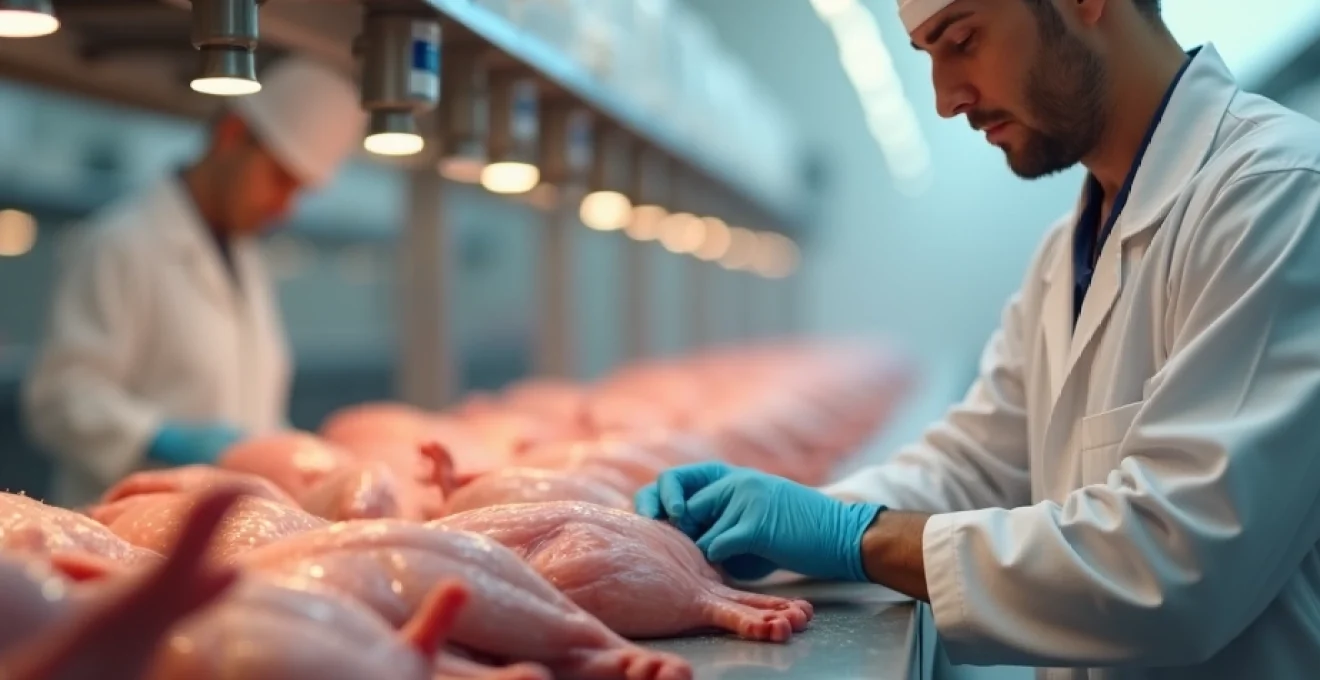
The recent decision by the United States Department of Agriculture to withdraw its proposed Salmonella Framework for Raw Poultry Products has sent shockwaves through the food safety community. This Biden-era regulation, which took three years to develop and aimed to significantly reduce salmonella-related illnesses from chicken and turkey consumption, has been scrapped following extensive industry opposition and concerns about economic burden. The withdrawal represents a pivotal moment in American food safety policy, affecting everything from laboratory testing protocols to commercial poultry processing operations across the nation.
With salmonella causing an estimated 1.35 million infections annually in the United States, including over 167,000 cases linked specifically to poultry products, this regulatory reversal raises critical questions about the balance between public health protection and industry compliance costs. The decision affects not only large-scale commercial producers but also small-scale operations that feared the rule would force them out of business entirely.
Usda’s new inspection policy framework under FSIS regulatory changes
The Food Safety and Inspection Service has fundamentally altered its approach to poultry safety regulation following the withdrawal of the comprehensive salmonella framework. This shift represents a move away from prescriptive pathogen limits towards what FSIS describes as a more “achievable and effective” regulatory environment. The agency received over 7,000 public comments during the consultation period, with many questioning the legal authority to impose such stringent product standards on the poultry industry.
Under the withdrawn proposal, FSIS would have declared raw chicken and turkey products containing more than 10 colony-forming units per gram of salmonella as adulterated. The framework also targeted six specific serotypes of particular concern: S. Enteritidis , S. Typhimurium , S. I 4,[5],12:i:- , S. Hadar , S. Typhimurium , and S. Muenchen . Any detectable levels of these strains would have rendered products unsaleable, requiring either cooking to eliminate the pathogen or complete destruction.
The Biden-era proposal would have imposed significant financial and operational burdens on American businesses and consumers, failing to consider an effective and achievable approach to address salmonella in poultry products.
The regulatory framework would have been subject to regular review every three to five years, allowing for adjustments based on emerging scientific evidence and industry developments. This adaptive approach was designed to ensure the standards remained both scientifically sound and practically implementable as detection technologies and processing methods evolved.
Modernised hazard analysis and critical control points (HACCP) implementation
The withdrawn rule would have required significant modifications to existing HACCP systems across poultry processing facilities. Establishments would have needed to develop comprehensive written procedures specifically targeting salmonella prevention and other enteric pathogens. These enhanced protocols would have integrated seamlessly with current HACCP requirements, creating a more robust food safety management system.
Processing facilities would have been required to reassess their critical control points, potentially identifying new stages in the production process where salmonella contamination risks were highest. This analysis would have demanded substantial investment in staff training and system documentation, particularly for smaller operations with limited resources for compliance activities.
Performance-based inspection systems replacing prescriptive salmonella standards
The proposed framework represented a shift from traditional prescriptive regulations towards outcome-based standards that focused on measurable public health improvements. Rather than dictating specific processing methods, the rule would have allowed establishments flexibility in achieving salmonella reduction targets through innovative approaches and technologies.
This performance-based approach would have encouraged industry investment in new pathogen reduction technologies and processing innovations. Companies demonstrating consistent success in meeting salmonella targets would have benefited from reduced regulatory oversight, creating incentives for continuous improvement in food safety practices.
Enhanced pathogen reduction performance standards integration
The integration of enhanced pathogen reduction standards would have complemented existing FSIS verification programmes, creating a comprehensive approach to microbial safety in poultry products. These standards would have been regularly updated based on epidemiological data and advances in food safety science, ensuring regulatory requirements remained aligned with public health objectives.
Establishments would have been required to demonstrate consistent performance against these enhanced standards through detailed record-keeping and regular self-assessment procedures. This data would have informed both industry improvements and regulatory policy development, creating a feedback loop between practical experience and regulatory evolution.
Risk-based sampling protocols for processing establishments
The withdrawn rule included provisions for risk-based sampling programmes that would have targeted high-risk processing operations and products with enhanced surveillance. These protocols would have utilised historical performance data, processing complexity, and product characteristics to determine appropriate sampling frequencies and testing requirements.
Facilities with consistently good performance records would have benefited from reduced sampling requirements, whilst those with elevated risk profiles would have faced increased scrutiny. This approach would have optimised regulatory resources whilst maintaining effective oversight of food safety performance across the industry.
Technical analysis of withdrawn salmonella enteritidis and typhimurium detection requirements
The technical specifications within the withdrawn salmonella framework represented some of the most sophisticated pathogen detection requirements ever proposed for the poultry industry. The rule would have established precise enumeration limits using advanced microbiological testing methods, moving beyond simple presence-or-absence testing to quantitative analysis of contamination levels. This approach acknowledged that not all salmonella contamination poses equal public health risks , with higher bacterial loads generally correlating with increased illness severity and transmission potential.
Detection requirements would have encompassed both traditional culture methods and newer molecular techniques, providing multiple pathways for identifying problematic products. The framework recognised that different salmonella serotypes pose varying levels of public health risk, with some strains demonstrating enhanced virulence characteristics that make them particularly dangerous to vulnerable populations such as children, elderly individuals, and immunocompromised persons.
Laboratory capacity across the industry would have required significant expansion to meet the proposed testing demands. Many smaller processing facilities lack in-house testing capabilities, meaning they would have needed to establish relationships with qualified third-party laboratories or invest in substantial infrastructure upgrades. This technical barrier was among the primary concerns raised by industry representatives during the comment period.
Laboratory testing methodology changes in FSIS notice 73-19
The proposed changes to laboratory testing methodologies under FSIS Notice 73-19 would have standardised detection procedures across all participating laboratories. These modifications encompassed sample preparation techniques, incubation parameters, and result interpretation criteria to ensure consistent and reliable pathogen detection across different testing environments.
Quality control measures would have been enhanced significantly, requiring laboratories to demonstrate proficiency through regular performance verification testing. This would have included participation in proficiency testing schemes and maintenance of detailed quality assurance documentation to support the integrity of test results used for regulatory decision-making.
Molecular subtyping and whole genome sequencing protocol adjustments
Advanced molecular techniques, including whole genome sequencing, would have played a crucial role in the withdrawn framework’s pathogen identification and characterisation requirements. These technologies enable precise identification of salmonella strains and their virulence characteristics, supporting more targeted public health responses to contamination events.
The integration of WGS protocols would have required substantial investment in laboratory equipment and staff training. However, these capabilities would have provided unprecedented insights into contamination sources and transmission pathways, potentially revolutionising outbreak investigation and prevention strategies within the poultry industry.
Enumeration limits and Colony-Forming unit thresholds modifications
The specific threshold of 10 colony-forming units per gram represented a carefully considered balance between public health protection and practical implementation challenges. This limit was based on extensive epidemiological research examining the relationship between bacterial load and illness risk, acknowledging that low-level contamination may not pose significant health risks when products are properly handled and cooked.
Enumeration procedures would have required precise laboratory techniques to ensure accurate quantification of viable salmonella bacteria. The methodology would have needed to account for potential variations in bacterial distribution within samples and the effects of processing conditions on bacterial survival and detectability.
Quality assurance verification testing programme revisions
Verification testing programmes would have been substantially expanded under the withdrawn framework, incorporating regular third-party validation of establishment testing procedures and results. This multi-layered approach would have provided additional assurance that pathogen detection systems were performing effectively and consistently across different facilities and testing scenarios.
The quality assurance framework would have included regular audits of laboratory procedures, equipment calibration verification, and staff competency assessments. These measures would have ensured that the enhanced testing requirements translated into genuine improvements in food safety rather than merely increased testing activity without corresponding quality gains.
Industry impact on poultry processing operations and compliance frameworks
The economic implications of the withdrawn salmonella rule would have been far-reaching across the poultry industry, affecting everything from small-scale processors to major integrated operations. Industry analysis suggested that compliance costs could have reached hundreds of millions of dollars annually, with smaller facilities bearing disproportionate burdens relative to their production volumes. The National Chicken Council strongly opposed the rule, arguing that it would have increased consumer costs whilst delivering minimal public health benefits.
Processing establishments would have faced significant operational challenges in implementing the required pathogen reduction measures. Many facilities would have needed substantial infrastructure modifications, including enhanced sanitation systems, improved processing line design, and expanded laboratory capabilities. These capital investments would have been particularly challenging for smaller operations already operating on thin profit margins in a highly competitive market.
We remain committed to further reducing salmonella and fully support food safety regulations and policies that are based on sound science, robust data, and are demonstrated to meaningfully impact public health.
The regulatory framework would have created new liability concerns for poultry processors, particularly regarding product recall obligations and potential legal exposure from contamination events. Insurance costs would likely have increased significantly as carriers adjusted their risk assessments to account for enhanced regulatory scrutiny and potential enforcement actions.
Supply chain implications would have extended beyond primary processors to include distributors, retailers, and food service operators. Enhanced traceability requirements would have demanded improved record-keeping systems and communication protocols throughout the distribution network, potentially affecting product flow and inventory management practices across the entire poultry supply chain.
| Facility Size | Estimated Annual Compliance Cost | Primary Cost Drivers |
| Small-scale processors | £150,000 – £500,000 | Laboratory testing, staff training |
| Medium-scale operations | £1 – £5 million | Infrastructure modifications, quality systems |
| Large integrated facilities | £10 – £50 million | System integration, compliance management |
Alternative pathogen control strategies for food safety modernisation
With the withdrawal of the comprehensive salmonella framework, the industry must now focus on alternative approaches to pathogen reduction that balance public health protection with economic practicality. Many processing facilities are already implementing innovative technologies such as antimicrobial interventions, enhanced chilling systems, and improved sanitation protocols that can significantly reduce pathogen loads without requiring extensive regulatory oversight.
Consumer education represents a critical component of any comprehensive food safety strategy, particularly given that proper cooking eliminates salmonella risks in poultry products. Enhanced labelling requirements and cooking guidance could provide consumers with the information needed to safely handle and prepare poultry products, potentially achieving public health benefits comparable to those sought through the withdrawn regulatory framework.
Industry-led initiatives may emerge as viable alternatives to prescriptive regulation, particularly if they can demonstrate measurable improvements in food safety outcomes. Voluntary programmes that encourage best practice adoption and continuous improvement could provide flexibility for innovation whilst maintaining focus on public health protection. Such approaches would allow different facilities to implement pathogen reduction strategies appropriate to their specific operational circumstances.
Advances in processing technology continue to offer new opportunities for pathogen reduction without requiring fundamental changes to regulatory frameworks. Technologies such as high-pressure processing, ultraviolet light treatment, and advanced antimicrobial compounds are becoming increasingly practical for commercial application. These innovations could deliver significant food safety improvements through market-driven adoption rather than regulatory mandate.
The role of data analytics and predictive modelling in food safety management is expanding rapidly, offering processors sophisticated tools for identifying and managing contamination risks. By leveraging historical data, environmental monitoring, and real-time process parameters, facilities can develop more effective pathogen control strategies tailored to their specific operational challenges and risk profiles.
Economic implications for commercial poultry producers and processing facilities
The economic relief provided by the withdrawal of the salmonella framework will be particularly significant for smaller poultry operations that were concerned about their ability to absorb compliance costs. Pat McNiff, operator of Pat’s Pastured farm in Rhode Island, expressed relief that the regulation was withdrawn, noting that it could have put small farms out of business entirely. The American Pastured Poultry Association estimated that up to 40% of small-scale processing facilities might have been forced to close due to increased production costs and liability insurance requirements.
Large integrated poultry companies such as Tyson Foods and Pilgrim’s Pride would have been better positioned to absorb the compliance costs associated with the withdrawn framework, potentially creating competitive advantages over smaller competitors. This differential impact raised concerns about market concentration and the long-term viability of smaller producers who provide diversity and competition within the poultry sector.
Consumer pricing implications would have been substantial under the withdrawn framework, with industry estimates suggesting retail price increases of 10-15% for poultry products. These cost increases would have disproportionately affected lower-income households that rely on affordable protein sources, potentially creating unintended social equity consequences from the well-intentioned food safety regulation.
International competitiveness concerns also influenced industry opposition to the framework, particularly regarding trade relationships with countries that do not impose similar pathogen reduction requirements. American poultry producers worried that enhanced regulatory burdens would disadvantage them in global markets where cost competition remains intense and regulatory requirements vary significantly between jurisdictions.
Investment patterns within the poultry industry may shift as a result of the framework’s withdrawal, with capital that would have been dedicated to compliance infrastructure now available for productivity improvements and market expansion activities. This redirection of resources could support industry growth and innovation in areas that deliver both economic and food safety benefits through market mechanisms rather than regulatory requirements.
The withdrawal decision reflects broader tensions within American food policy between prescriptive regulation and market-based approaches to public health protection. As the Trump administration continues to evaluate inherited policies from the previous administration, similar regulatory reversals may occur across other sectors of the food industry, potentially reshaping the landscape of food safety oversight for years to come. The challenge moving forward will be maintaining progress towards improved food safety outcomes whilst avoiding regulatory burdens that stifle innovation and economic growth within this vital agricultural sector.